My ants are not eating
A colony that ignores its food is worrying, but it is often normal. Here is what to check, in order.
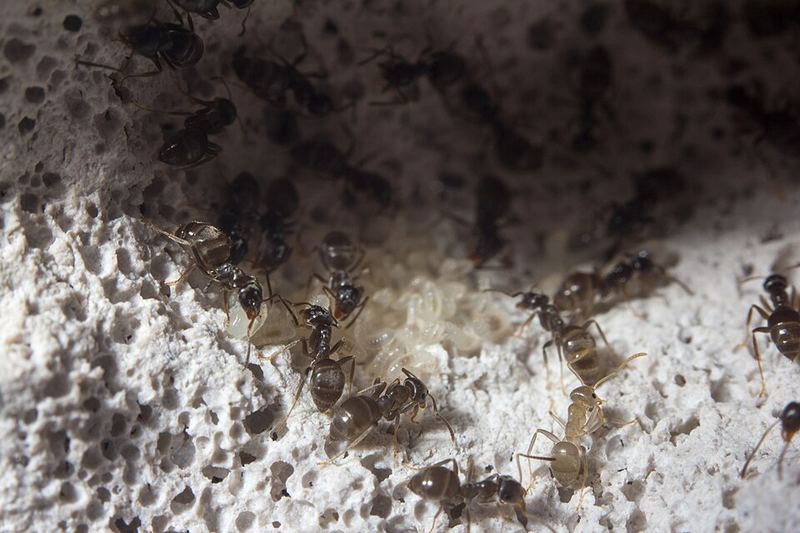
_in_Formicarium.jpg)
1. The season
In autumn, European species slow down before hibernation: they eat much less protein, then almost nothing. This is normal. The hibernation calculator tells you when to start.
2. Temperature
Below about 20 °C most colonies eat little and the brood grows slowly. Above 30 °C they may also hide. Aim for 22–28 °C depending on the species.
3. The brood
Protein is mostly used to feed the larvae. With no larvae (only eggs or cocoons), a colony often refuses insects and only takes sugar. Protein demand returns with new larvae.
4. They already have enough
Workers with a round, swollen abdomen have already filled up. An overfed colony leaves leftovers: reduce the amounts.
5. The food is not suitable
- Prey too big, too hard, or alive and aggressive: cut it or kill it first.
- Sugar water too concentrated or too old: replace it every 3–4 days.
- Seed-eating species (Messor): it prefers seeds.
- Prey that may have touched insecticide: throw it away.
6. Stress
A colony that has just been moved, handled or exposed to light may stop foraging for a few days. Leave it quiet and dark.
When to worry
If the colony stops eating and workers die in numbers, the queen stops laying in the middle of the season, or the brood disappears, look for another cause: tube water gone, heat, toxic product, mold (see mold in the nest).
A drop in appetite for a few days or weeks, with no deaths, is almost always one of these normal causes.
Frequently asked questions
Why do my ants refuse insects?
Often because there are no larvae: protein is mostly used to feed them. The colony then only takes sugar.
Is it normal for my ants to eat less in autumn?
Yes. European species slow down before hibernation.
How long can a colony go without food?
Several weeks if it has water, especially when cool. Water is more urgent than food.
Amounts and timings are average guidelines, not rules. Always adjust to what you see in your own colony (leftovers, appetite, brood).